
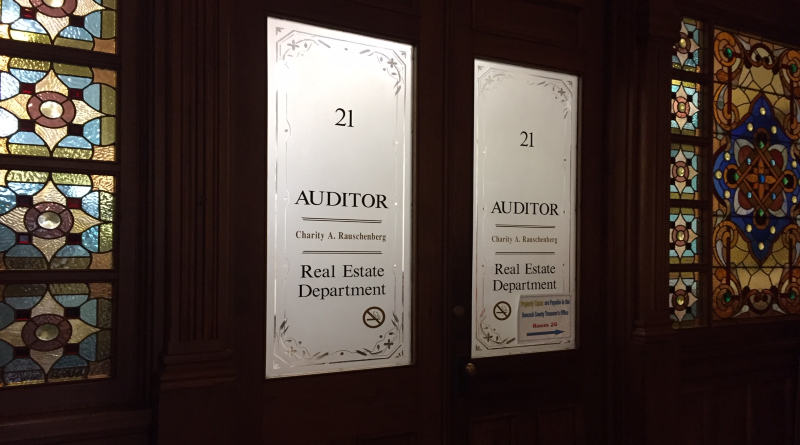
Auditor’s Office Completes Complex Property Tax Changes
(From The Hancock County Auditor’s Office)
Charity Rauschenberg, Hancock County Auditor, states the property tax calculations have been completed for second half tax bills. Property tax information can now be viewed on the Hancock County Auditor’s Real Estate website for the 2026 second half collection period, due August 7, 2026. It is estimated that tax bills will be generated and in the mail within two weeks.
The tax balance is reflective of the House Bill 186 credit applied to the 2nd half taxes, if applicable. The Hancock County Auditor website for tax history is under construction to display the new inflation cap credit (ICC). Balances shown are the amount due for 2nd half taxes.
The eight Hancock County school districts will experience a reduction from school’s 20 mill guarantee calculated as a result from the triennial valuation update. The schools with a 20 mill floor are now capped at an inflationary percentage. Findlay City School District is not at the 20 mill floor from the last update. For property owners in the Findlay City School district, a HB 186 credit will not apply. The largest reduction being applied is in the Hancock County Hardin-Northern (.107114) and Riverdale (.091416) school district properties. Other reduction factors range from .07 to zero depending on the school district millage.
In addition, two corrections were made to tax rates. Liberty Township millage was corrected for the passage of the fire replacement levy. This will result in an increase for those properties in the township. For those in the Liberty township district and either McComb or Liberty Benton school district the net effect is a reduction after the inflation credit has been applied. For those in the Findlay City school district in which no reduction is applied, the net effect is an increase. The second correction is the reduction in the substitute levy for Liberty Benton school district due to the triennial update values. The voter approved rate was applied for first half tax bills but the adjustment was applied to the second half tax bill to generate the voter approved revenue based on the updated triennial values.
House Bill 186 contains more changes to property taxes such as an increased homeowner occupancy credit. This credit will be phased in starting with the tax year 2026 payable 2027. Also commencing next year is the reduction of the tax break for rental or investment properties in the category Class 1. Larger rentals and investment properties, Class II, have already experienced the loss of this non-business credit.
Rauschenberg’s office is open Monday through Friday from 8:30 am – 4:30pm. For questions, call (419) 424-7015.
